


Finally, expert neurology care at your fingertips
Neura Health is a comprehensive virtual neurology clinic. Meet with a neurology specialist via video appointment, and get treatment from home.

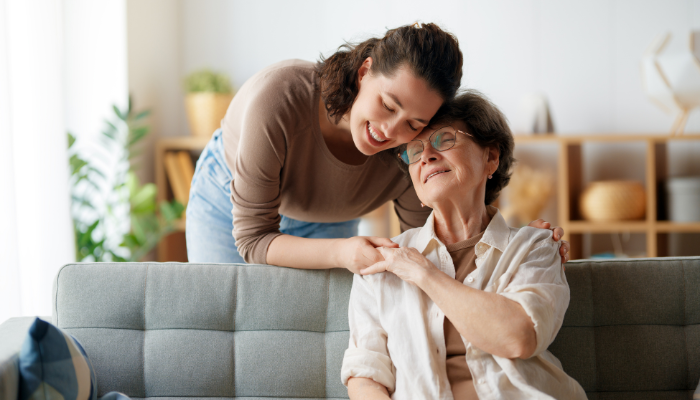
Alma had no idea seizures could happen alongside dementia.
Her mother lives with frontotemporal degeneration (FTD), and Alma has been her primary caregiver for several years. One morning, her mother got up to use the restroom, walked out, passed out, and had a seizure. The cause was a severe UTI and dehydration that they hadn't caught in time.
This emergency situation taught Alma something no one had warned her about: neurological conditions can overlap, shift, and trigger a crisis.
Neurological caregiving is really about learning in real time, adapting constantly, carrying the emotional and medical weight of someone else's condition while trying to hold your own life together. This post is the playbook we wish someone handed every caregiver on day one.
Even without a perfect playbook, there are things that make the path a little more navigable.
Get support that understands neurological care specifically. General caregiver resources are valuable, but there's a difference between broad guidance and someone who understands what FTD progression looks like, or why your loved one's behavior changed, or what questions to ask at the next appointment. Look for condition-specific communities, patient advocacy organizations, and sub-specialized neurology care teams.
Stop waiting for a crisis to ask for help. Alma's story is a reminder that neurological conditions can escalate quickly and in unexpected ways. The time to build your support system (whether that's a specialist, a home health aide, or a family meeting about shared responsibilities) is before you're in the emergency room.
Learn the warning signs specific to your loved one's condition. Infections, dehydration, medication interactions, and sleep disruption can all look like neurological decline when they're actually treatable triggers.
Give yourself permission to not be okay. You are human. Grief, exhaustion, and ambivalence are signs that you're doing something genuinely hard and that you need care too.
Find at least one place where you can be honest. This could be a therapist, a caregiver support group, a friend, or even a journal, so you can be yourself without having to perform and sustain this journey long-term.
One of the most consistent things we hear from caregivers is that access to a neurologist, who can answer questions, adjust care plans, and flag what to watch for, makes an enormous difference. But for many families, getting that access is an obstacle in itself. Long wait times, limited specialists in their area, and appointments that feel too short to cover everything.
That's a gap we think about a lot at Neura Health. Our neurologists work alongside your loved one's existing care team, providing specialized support without replacing the relationships you've already built. If you're navigating a neurological condition and wondering what more coordinated care could look like, we're here to help.
Caregiving is one of the most demanding things a person can do. You deserve support that actually meets you where you are.


Neura Health is a comprehensive virtual neurology clinic. Meet with a neurology specialist via video appointment, and get treatment from home.
.png)

.svg)

.png)
.png)
.png)
