


Finally, expert neurology care at your fingertips
Neura Health is a comprehensive virtual neurology clinic. Meet with a neurology specialist via video appointment, and get treatment from home.

.png)
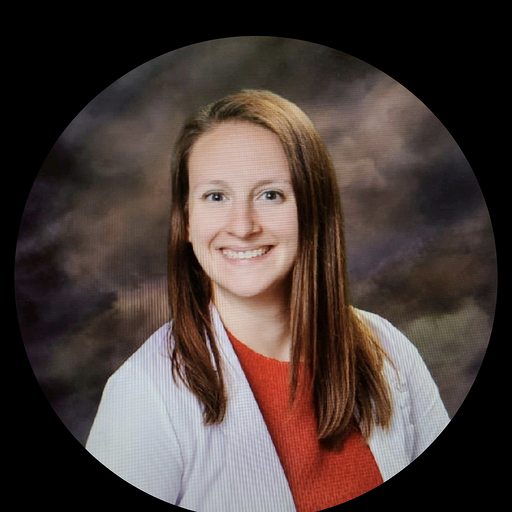
Neura members can now book video appointments with Amanda Dendis, NP.
If you are not a member yet and would like to book an appointment, start your Neura trial membership today!
At Neura Health, we're excited to introduce Amanda Dendis, Neuro APRN. With extensive experience in both inpatient and outpatient neurology, including work in a Level One Neuro ICU and teleNeurology, she has advanced certifications in stroke care, neuro nursing, and critical care. Amanda has a keen interest in autonomic dysfunctions like POTS, MCAS, and long COVID. Living with migraine and advocating for her child with epilepsy, she is dedicated to patient-centered care, ensuring that every individual feels heard and supported in their health journey.
Video Transcript:
Hi, I'm Amanda. I'm one of the neuro APRNs at Neura Health.
What is your clinical and medical background?
My grandfather suffered a massive hemorrhagic stroke when I was still in college. I was actually studying to be a political science major and was planning on going to law school, and totally did a 360 and decided that I wanted to go into nursing. The first nursing job I got was in a level one trauma center in the neuro ICU at SUNY Upstate in Syracuse, New York. And I worked there for four years. And while I was doing that, I went back to get my master's degree at SUNY Upstate.
So I went back and got my nurse practitioner degree. On the way, I got a couple of certifications: my stroke certification, my neuro RN certification, and my critical care certification. And then when I graduated from my master's program, I started working in outpatient neurology at a practice in Canandaigua, New York. And then I've been outpatient in several different settings ever since. I also then worked inpatient for teleNeurology. And I did that for a couple of years. And now here I am at Neura, back to outpatient.
What’s your special interest within your specific field?
I love all autonomic dysfunction. So, POTS, MCAS, any kind of disruption, long COVID that disrupts the autonomic nervous system. That's really one of my favorite things to treat and help with because it's such an understudied field. think there's only a couple of places that really study and really go into autonomic dysfunction. And it's so misdiagnosed. There's so many different types, and there are so many symptoms that it can often be labeled as anxiety or fibromyalgia or something in that case. So I really love autonomic dysfunction and am super interested in all different kinds of strokes. One of my favorite things is to try to figure out what the underlying mechanism of stroke is and really watch patients rehab themselves from strokes.
What’s your approach to treating patients?
I really think taking a good history because when I'm talking to patients, if I can pull out that piece of information that makes me go, aha, okay, that's something, then we can dig into that. And sometimes it's something as small as your vitamin B12 being quote unquote normal, but we find it's actually 252, which we know is on the really low side and should be repeated. Just those little pearls that I can take from a good history really help with finding a diagnosis and helping. And I think really when I'm talking to a patient, just hearing them and really trying to understand what they need. They're not always looking for 100% accurate diagnosis or a 100% treatment plan. They're just looking for somebody to guide them and say, “Okay, this is where we should go. This is what we should look at. Let's make a plan together to try to figure out what's going on and to help.”
What is your POV on patient-first care?
It's the driving factor in my approach to patients, because if you're not putting the patient first, what are you doing? I mean, what, what are we doing here if we're not making the patient the center of my medical universe? I guess if a patient isn't first, then what is first? I mean, it just makes the most sense. If I were walking into a doctor's office, I would want the doctor to look at me and say, I want to help you. I don't want to just be diving into a chart and not look up at you and not make eye contact or conversation or treat you like a human being. I think that that's sometimes what medicine is missing, that human element that you are a person, we need to put you first, we need to put what your symptoms are, we need to put what you're experiencing first. And if that's not the case, then I really don't know what else we're doing here in medicine.
Do you have a chronic condition or does someone close to you have a chronic condition?
So I actually suffer from migraines. I've suffered from ocular migraines since I was 13, 12 years old. They're very well treated now that I've been diagnosed appropriately, which took a long time. So that's why I understand with a lot of my patients, the frustration of having a chronic condition. And then my seven-year-old has epilepsy. Navigating the world with that has been interesting, seeing it kind of from the other side of the lens.
How do you manage these conditions?
When I have a migraine or when I feel the start of an aura, I know exactly what to do. I've got my toolbox, I've got my steps. So that makes it really, really easy for me. With my son, when we first figured out that he had epilepsy, it was really hard to tell somebody. Like nobody was really listening to us when we first went into the hospital, even with a neuro background.
And I said, something is wrong. This doesn't seem right. It took a lot of convincing to get him into the right testing, to get him to the pediatric neurologist. And our pediatric neurologist is fabulous. She knew right off the bat that something was awry. Just being able to advocate and push for those answers was really important. And that's what I always advocate for my patients to do is push for answers, get your answers. If you think something's going wrong or you have an idea or something, just bring it to us, bring it to a provider. Say what you think because I'm never going to tell you that you don't know what you're talking about. We'll explore it, we'll figure out if the symptoms match, and we'll try to figure it out.
What advocacy groups do you feel passionately about?
I really like Headache on the Hill. I think that advocacy is so important because a lot of people think migraine, and they just think it's a headache. And you're just like, it's not a headache so much more than that. So the fact that we have advocacy groups actually going to Washington and advocating for migraine is fabulous. absolutely love it. Dysautonomia International that's another group. But all those groups that really push for fair treatment with patients with autonomic dysfunction. They're doing the Lord's work. They are really trying to push for more answers, for more funding, for more research for these people because we are just diagnosing more and more people every day with POTS and autonomic dysfunction, MCAS, all of that stuff.



Neura Health is a comprehensive virtual neurology clinic. Meet with a neurology specialist via video appointment, and get treatment from home.
.png)

.svg)

.png)
.png)
.png)
