


Finally, expert neurology care at your fingertips
Neura Health is a comprehensive virtual neurology clinic. Meet with a neurology specialist via video appointment, and get treatment from home.

.png)
Book a video appointment with Aviva Engel, PA today.
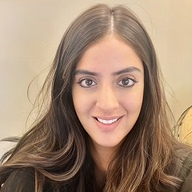
At Neura Health, we offer expert neurological care for all our patients, supporting them throughout their health journey. We're happy to introduce Aviva Engel, PA-C. Aviva is a neurology-trained Physician Assistant who completed her specialized fellowship training at the Medical University of South Carolina (MUSC). Dedicated to providing a patient-first experience, Aviva is passionate about ensuring patients feel validated, deeply heard, and dignified while navigating their neurological health.
I went to the University of Maryland undergrad. I did two separate degrees there. I did a biology degree and then a language degree. I took a few years off to get some medical experience. At that point, I decided to pursue PA school.
I went to MUSC, which is the Medical University of South Carolina, located in Charleston, South Carolina. One of the most beautiful cities in the world. Um, if you haven't been, that's the place to go. So, I did two and a half years of PA school there.
Towards the end of my schooling, I decided to do an extra year as a neurology fellow. Um, and that was a really amazing experience. I got to do that with three other fellows, and we worked in a hospital—the teaching hospital MUSC. I worked with multiple different attendings, had different clinic days, and got to be part of procedures. Um, I did a lot of lumbar punctures and Botox for migraine.
Towards the end of my fellowship, COVID hit, and so we basically had to overnight switch from in-person care to remote care. What kind of happened out of necessity actually became somewhat of a blessing for a lot of us, and, um, that's kind of where my interest in remote care started. We were able to still take care of patients, you know, schedule appointments as needed, order medicine, order testing within the comfort of a patient's home, and actually, it actually became a preferred situation for a lot of people.
As an undergrad student, I had this opportunity to assist with an elderly patient. She was over 90 years old. She obviously had severe dementia and just really, really needed a companion. And so as a young student, I became her companion many days of the week, without really knowing much about dementia or any other neurological disorders.
And she really taught me way more than I could have ever done for her. She, you know, taught me compassion, listening, and caregiving for someone who really couldn't do anything on their own towards the end of her life. That was really my first interaction personally with someone with severe dementia. Looking back now, I think that really shaped a lot of my career in terms of neurological care.
I think I've always had a sense of empathy for many different kinds of people, whether it's in a clinical setting or not. As a mother, obviously, I have to show empathy to my own children all day, every day. But it's just something that has been instilled in me from a very young age, and it's not, um, a challenge for me to have empathy for people.
When I'm working, it is really just listening and not interrupting, and allowing a patient and their family the space to just talk and explain and tell me about their trials and their pain. And that's where it really begins, really establishing the trust, reminding them that I'm there for them and that I'm always going to be a listening ear.
I feel like without that kind of foundation, it's very hard for a patient to trust their provider, and so it's very important for me to start with that.
I love a little bit of everything. I think that having a neurology fellowship background has really exposed me to so many common and less common neurological disorders. That being said, I'm, you know, comfortable treating things like tremor, migraine, obviously, and headache disorder, TBI, and concussions.
I have a special place in my heart for any of our dementia and cognitive disorder patients and their caregivers. Often, those kinds of patients need a lot of co-management with other specialties, including geriatric psychiatry, psychology, a dietitian, and their primary care.
And so it feels very normal to me to see them remotely, have the discussion obviously with lots of empathy and care and concern, but also dignity, um, and just reminding the patients and their families that this is a very hard diagnosis, but we're here for you. We're going to do our best to make you feel better, but also to have you continue in a dignified manner. That's very important for me.
I think patients really need someone to connect with—someone that gets their condition obviously on a clinical level, but also on a personal and human level. I think that establishing trust is the most basic need for any patient, and it really starts there.
With neurology specifically, because the organs that we're dealing with are the most complex in the entire body, it really takes a very skilled provider to manage these disorders, but also to be able to connect the dots. The brain likes to hold its secrets very tightly.
And so if you have a provider that's able to kind of prying the secrets one by one, take into account all the details of the history, do a thorough exam as much as possible virtually, but in person as well, we can get you feeling better.
At Neura Health, a lot of people—we see a lot of new diagnoses. Um, a lot of people will alternatively come to us on their last legs, um, and basically, they're desperate for someone who's going to listen. They've told their story a hundred times to other providers and just have not had any clarity.
So, my point of view would be, "I know you've told your story 101 times," and then going forward, we're going to take care of you and make sure that we do all the best next steps to get you feeling better.
I am very blessed to have my health. I think I'm chronically tired just because of having young children in the house. I have a set of twins, and they, you know, for any of the twin families out there, I see you. It really takes a village. So, I'm—I'm very lucky to be healthy and be able to take care of my family.
I do get tension headaches. I've had that for many, many years. Um, I've been able to manage it pretty well with medication and reduce stress and exercise techniques.
But I don't get migraines. They can be very debilitating, as can many neurological disorders. So, I do have that empathy with patients that suffer from complex neurological disorders, including migraine.



Neura Health is a comprehensive virtual neurology clinic. Meet with a neurology specialist via video appointment, and get treatment from home.
.png)

.svg)

.png)
.png)
.png)
