


Finally, expert neurology care at your fingertips
Neura Health is a comprehensive virtual neurology clinic. Meet with a neurology specialist via video appointment, and get treatment from home.


Your brain runs on a different operating system than everyone else's.
If you live with a neurological condition, every conversation, every bright light, every "quick stop" at Target costs you more energy than it costs other people.
Pacing is spending that energy like the limited currency it is (strategic, deliberate, never reckless).
It doesn't mean doing nothing. It doesn't mean leaving before dessert (unless you want to). It means knowing when to stop so you still have energy and motivation left for tomorrow
Your energy is a checking account with zero overdraft protection.
People without chronic conditions can overspend their energy (stay up late, skip meals, run around) and bounce back with a good night's sleep. They have overdraft protection.
You don't.
When your account hits zero, the bank doesn't charge a fee. It shuts down entirely. The penalty? A migraine attack, seizure, nerve pain flare, or days of crushing fatigue.
Pacing means never hitting zero. It means stopping at 50% capacity, not 110%.
On Christmas Eve, you wake up feeling good. Finally! You bake cookies, wrap gifts, and hit the party. You spend everything.
By Christmas morning, you're in bed, in pain, missing everything that matters.
This boom-bust pattern is the enemy of sustainable celebration. Pacing can break the cycle. Doing 50% of what you think you can do saves energy, so you can do it again tomorrow.
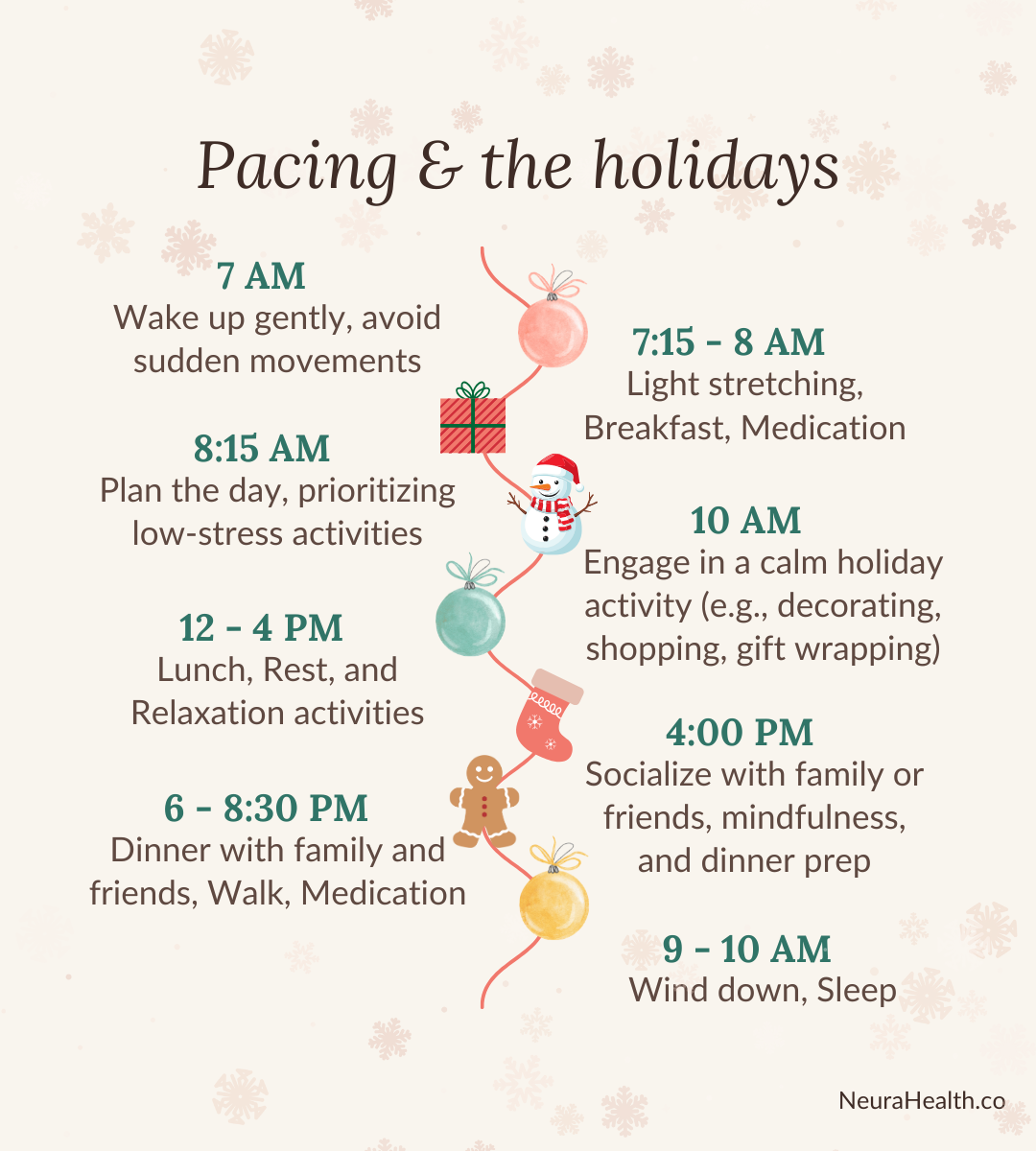
Don't wait until your battery is red to charge it. Schedule rest before the big event.
If you have a family dinner at 6:00 PM, lie down in a dark, quiet room from 4:00 PM to 5:00 PM. Even if you don't sleep, this "sensory low" creates a buffer of energy for your brain to use later.
Your brain has different energy pools. If you do too many physical tasks in a row, you'll exhaust your body even if your mind still feels okay. If you do too many mental tasks in a row, you'll get brain fog even if you're not physically tired.
Switch between different types of activities:
Movement and activity are great for the brain, but during a high-stress holiday marathon, static standing (standing still in one place) can be a hidden energy drain.
Standing still requires your brain to constantly manage balance and blood pressure (orthostatic stress). If you are feeling fatigued or nearing your limit, swap the standing for sitting so you can save that energy for the fun stuff. Chop veggies at the kitchen table. Grab a stool while chatting at the cocktail party. Conserve physical energy so you can spend social energy.
Drive yourself. Set a code word with your partner that means "20 minutes left, start the goodbyes." Knowing you can leave whenever you need prevents the anxiety spiral that may trigger flare-ups.
"I'm so happy to see everyone, but I need to head out so I can feel good tomorrow. Thanks for understanding."
You don’t need to justify.
Pacing keeps you from missing out entirely. Three one-hour appearances where you're actually present beats one four-hour marathon followed by three days in bed.
Neura Member Tip: Struggling with pacing? Your care coach and neurologist can help build a personalized "rescue plan" for when you accidentally overspend. Book a visit today.


Neura Health is a comprehensive virtual neurology clinic. Meet with a neurology specialist via video appointment, and get treatment from home.
.png)

.svg)

.png)
.png)
.png)
