


Finally, expert neurology care at your fingertips
Neura Health is a comprehensive virtual neurology clinic. Meet with a neurology specialist via video appointment, and get treatment from home.


Witnessing someone have a seizure can be frightening, but knowing what to do can make all the difference. Amanda Dendis, Neura Health Nurse Practitioner in General Neurology, shares essential guidance in our video to help you respond confidently and safely.
The good news? Most seizures are self-limiting and last only one to two minutes. And with the right knowledge, you can respond confidently and help keep someone safe during a seizure.
Seizures can present in many different ways. Here are the key signs to watch for:
Physical manifestations
Sensory and perceptual changes
In infants and children
Stay vigilant and pay close attention to these indicators!
When you see someone having a seizure, follow these steps:
Move all objects away from the person, especially anything sharp or hard that could cause injury. As Amanda Dendis, NP emphasizes, your first priority is preventing the person from hitting their head or injuring themselves on nearby objects.
If the person isn't already on the ground, carefully help them down. Gently roll them onto their side with their mouth facing downward to keep their airway clear, reducing the risk of choking from vomit or secretions. If it's safe, place something soft like a jacket or a pillow under their head for added comfort.
Loosen any tight clothing around their neck to help them breathe easier, being mindful of everyone's safety. If they're wearing glasses, kindly remove them to prevent any potential injury. Your thoughtful actions can make a big difference in their safety and comfort!
Never:
After a seizure ends, the person may be confused, disoriented, or even combative. This is called the post-ictal period, when the brain is recovering from the intense electrical activity.
During this time:
You can guide them to a comfortable, safe space as they regain awareness. Gently reassure them and explain the situation, as they might be confused or not remember. Keep a watchful eye to ensure they don’t inadvertently wander into danger. Monitor their breathing and recovery closely, and take notes on the seizure’s duration and details for later reference. Remember, they might feel disoriented and combative, so prioritize both your safety and theirs throughout this process.
Call for emergency medical assistance immediately if:
Act quickly if:
If you've been trained to administer intranasal or intrarectal diazepam (Valium) or midazolam, you may administer these medications in a safe environment. However, only do so if you've received proper training and it's safe for both you and the person experiencing the seizure.
Myth #1: You can swallow your tongue during a seizure.
Truth: This is physically impossible. Placing objects in someone's mouth during a seizure can cause serious injury, broken teeth, or choking.
Myth #2: You should hold someone down during a seizure.
Truth: Never restrain someone during a seizure. Their muscles are extremely strong and stiff, and restraining them can cause injuries to both of you.
Myth #3: All seizures involve dramatic shaking.
Truth: Some seizures appear as blank staring, confusion, or subtle movements. Not all seizures are convulsive.
For patients with epilepsy or seizure disorders:
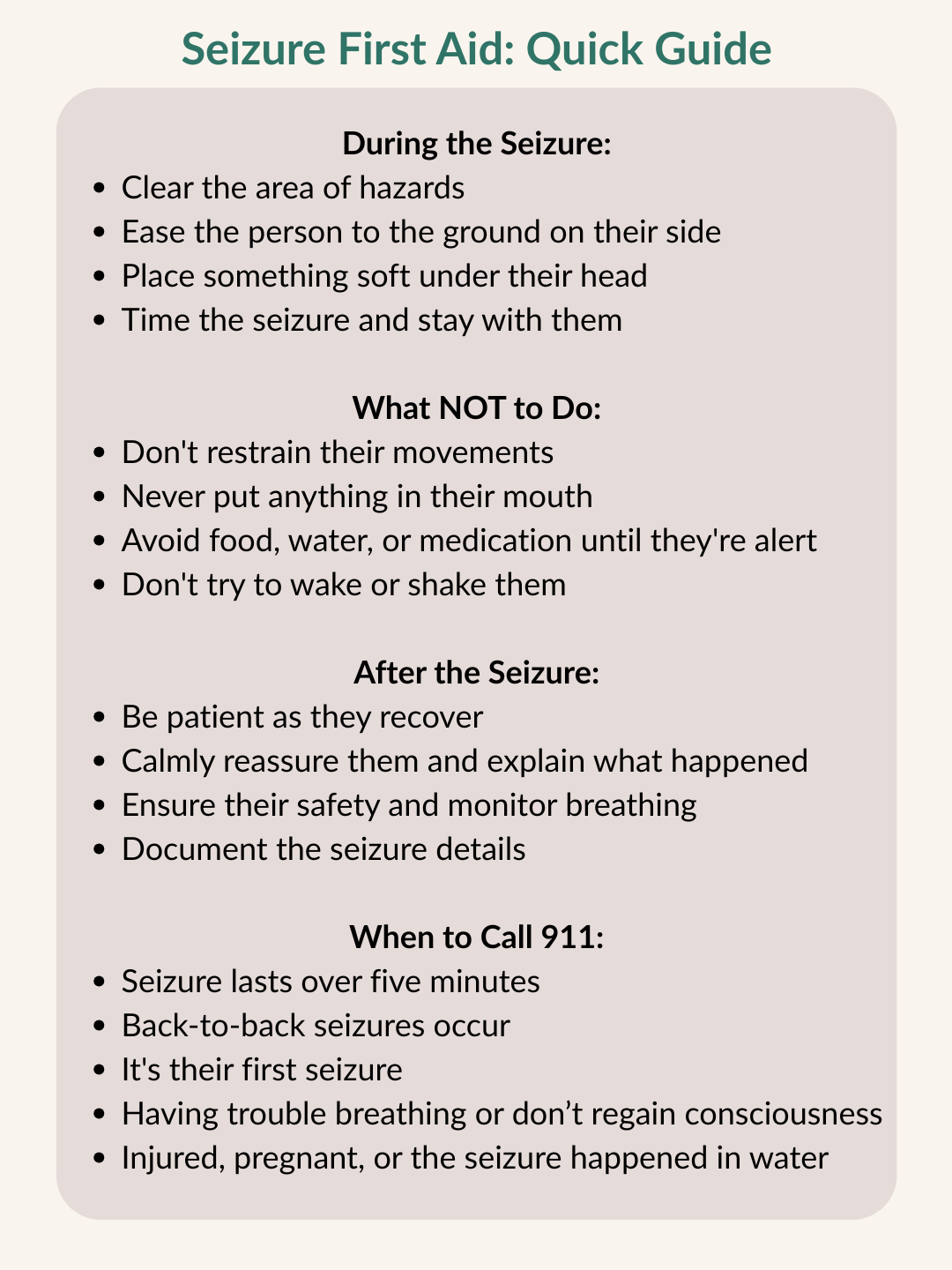
Seizures can be frightening to witness, but as Amanda Dendis, NP reminds us, they're typically self-limiting. With the knowledge you now have, you can respond effectively, keep someone safe, and potentially make a life-saving difference.
Remember: Stay calm, prioritize safety, and know when to call for emergency help. Your confidence and quick action can provide critical support when someone needs it most.
Need ongoing seizure management support? Neura Health's board-certified neurologists specialize in epilepsy and seizure disorders. Book a visit here.




Neura Health is a comprehensive virtual neurology clinic. Meet with a neurology specialist via video appointment, and get treatment from home.
.png)

.svg)

.png)
.png)
.png)
