


Finally, expert neurology care at your fingertips
Neura Health is a comprehensive virtual neurology clinic. Meet with a neurology specialist via video appointment, and get treatment from home.

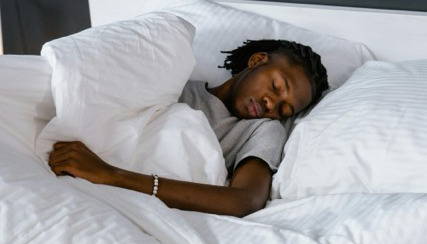
If you struggle with symptoms from sleep apnea or suspect that you have sleep apnea, you may be wondering if you will have to stay on treatment long-term or if the condition can even be cured. Many sleep apnea sufferers ask these kinds of questions when dealing with their condition.
In short, it all depends on a wide range of factors like the type of sleep apnea, its severity, and what the exact cause of the condition is. The answer may seem kind of complex, but there are actually many treatment options and lifestyle changes that can drastically improve your symptoms and quality of life.
This article will explain how sleep apnea can significantly improve, when it has to be managed long-term, and why treatment is often effective even if it is not a true cure.
Like many other sleep disorders, sleep apnea is not a single condition with a “one size fits all” solution. Many things can cause sleep apnea such as airway blockage, issues with breathing control, anatomy, weight, and other long-term factors.
People with sleep apnea may have several questions running through their mind about their condition, but because there are so many factors that play a role, simple yes or no answers are just not medically accurate.
The most common type of sleep apnea is obstructive sleep apnea. In this condition, the airway that is responsible for your breathing narrows or collapses repeatedly while you are asleep.
When people wonder about whether sleep apnea can be cured, they are often referring to this type. Fortunately, obstructive sleep apnea is the type that is most likely to improve through lifestyle changes like losing weight, limiting alcohol intake, or quitting smoking.
On the other hand, breathing problems related to central sleep apnea are caused by problems with signaling pathways in the body. Instead of just an airway blockage, there is dysfunction in the way the muscles and nervous system communicate with each other.
Because central sleep apnea is more complex, it makes the question of a “cure” more difficult to answer as the condition can be harder to manage. As a result there are different treatment pathways compared to obstructive sleep apnea.
Because there are many causes of sleep apnea, improvement will depend on what type of sleep apnea you have—no single approach works for everyone. In certain cases, especially with obstructive sleep apnea, the condition can dramatically improve once the main factor causing it is removed or corrected.
Fortunately, there are many lifestyle factors within your control that you can adjust to potentially improve your sleep apnea. Here are some of those things:
Adjusting these reversible factors can help improve and reduce sleep apnea symptoms, especially in milder cases. However, improvement in symptoms with these lifestyle changes does not necessarily mean your sleep apnea is cured. You should continue to follow up with your specialist and their personalized treatment plan as directed.
For some people, losing weight can help improve obstructive sleep apnea symptoms by reducing airway obstruction. However, it may not be a feasible option for everyone. Some people may have mobility limitations, financial difficulties, or other medical conditions that can make it hard to lose weight.
You can think of weight loss as just one of many lifestyle changes that can be made to improve sleep apnea symptoms. A comprehensive and individualized approach tailored towards your condition is the best way to find long-term relief. Even if symptoms improve, it is essential to keep following up with a specialist and their recommended treatments as directed, instead of assuming that your condition has fully resolved.
Sometimes, differences in nasal anatomy can cause breathing issues that make obstructive sleep apnea worse. When this is the case, surgical options can significantly improve symptoms. Like with other treatments or lifestyle modifications, surgery may not be a full cure and its success depends on what exactly is causingthe airway problem.
A Continuous Positive Airway Pressure (CPAP) machine is one of the most effective treatments for sleep apnea and can make a significant difference in symptoms and health risks related to the condition.
The device does not permanently remove the cause of the sleep apnea, but it provides relief by helping keep your airway open while you are asleep. Essentially, it is a treatment and management option instead of a cure, but it has been shown to be quite effective for sleep apnea.
With sleep apnea, treatment approaches are focused on managing the condition and providing symptomatic relief, as the idea of a true “cure” is quite complicated. An ideal treatment and management plan is individualized towards the specific cause of your sleep apnea and other factors like its severity and other health conditions you may have.
In milder cases of obstructive sleep apnea, or when someone has trouble using a CPAP machine, oral appliances can be used. An example is a mandibular advancement device, which is a special mouthguard that you wear while you sleep to help keep your airway open.
Just like with other treatments and lifestyle changes, oral appliances are not a cure, but can help relieve symptoms and improve your quality of life.
Certain lifestyle modifications like quitting smoking, changing your sleeping position, and reducing alcohol intake can improve symptoms and support your overall treatment plan. If your sleep apnea is mild or caused by reversible lifestyle factors, these changes can be helpful.
Managing your weight can also be a helpful lifestyle change, though it may not resolve sleep apnea on its own.
Compared with more severe cases, mild sleep apnea has greater room for improvement with appropriate treatment. With management, mild sleep apnea symptoms can improve and become less clinically significant.
It is important to keep in mind that “mild” sleep apnea does not mean it is not harmless or not significant. Even mild sleep apnea can cause bothersome symptoms and affect your overall health. That is why it is important to get evaluated with a specialist, even if you feel that it is mild.
With severe cases of sleep apnea, long-term treatment is often needed as the condition is less likely to be fully eliminated. The goal of treatment is to get the condition and its symptoms quickly and safely under control. If sleep apnea is severe or has a central cause, it is very important to get evaluated by a specialist so that the condition can be managed and controlled appropriately.
There are certain signs and symptoms that may indicate sleep apnea. If you notice loud snoring, gasping for air when you are asleep, or being overly tired during the day, these can all be valid reasons to get evaluated by a sleep specialist to figure out the cause.
Any suspicion for sleep apnea, whether you feel that it is mild or severe, is worth getting evaluated for. And you do not need to know if your condition is curable or not before consulting with a sleep specialist. A thorough evaluation is the only way to determine its cause and severity, so that you can get it treated and managed as soon as possible.
The first step to getting care is figuring out what type of sleep problem you have. Take our sleep disorder quiz to help understand your symptoms better. It is a helpful starting point if you are not sure what your symptoms mean and can jump start your search for finding treatment and relief.
Neura’s virtual care model makes it quick and easy to monitor and discuss your symptoms, review your next steps, and understand your treatment pathways. Get started with Neura today.
---
References:
Slowik JM, Sankari A, Collen JF. Obstructive Sleep Apnea. [Updated 2025 Mar 4]. In: StatPearls [Internet]. Treasure Island (FL): StatPearls Publishing; 2026 Jan-. Available from: https://www.ncbi.nlm.nih.gov/books/NBK459252/
Jang, Y. S., Nerobkova, N., Hurh, K., Park, E. C., & Shin, J. (2023). Association between smoking and obstructive sleep apnea based on the STOP-Bang index. Scientific reports, 13(1), 9085. https://doi.org/10.1038/s41598-023-34956-5
Zheng, M., Wang, X., & Zhang, L. (2018). Association between allergic and nonallergic rhinitis and obstructive sleep apnea. Current opinion in allergy and clinical immunology, 18(1), 16–25. https://doi.org/10.1097/ACI.0000000000000414
Magliulo, G., Iannella, G., Ciofalo, A., Polimeni, A., De Vincentiis, M., Pasquariello, B., Montevecchi, F., & Vicini, C. (2019). Nasal pathologies in patients with obstructive sleep apnoea. Acta otorhinolaryngologica Italica : organo ufficiale della Societa italiana di otorinolaringologia e chirurgia cervico-facciale, 39(4), 250–256. https://doi.org/10.14639/0392-100X-2173
Menon, A., & Kumar, M. (2013). Influence of body position on severity of obstructive sleep apnea: a systematic review. ISRN otolaryngology, 2013, 670381. https://doi.org/10.1155/2013/670381
Pinto VL, Sankari A, Sharma S. Continuous Positive Airway Pressure. [Updated 2025 Jul 7]. In: StatPearls [Internet]. Treasure Island (FL): StatPearls Publishing; 2026 Jan-. Available from: https://www.ncbi.nlm.nih.gov/books/NBK482178/


Neura Health is a comprehensive virtual neurology clinic. Meet with a neurology specialist via video appointment, and get treatment from home.
.png)

.svg)

.png)
.png)
.png)
